
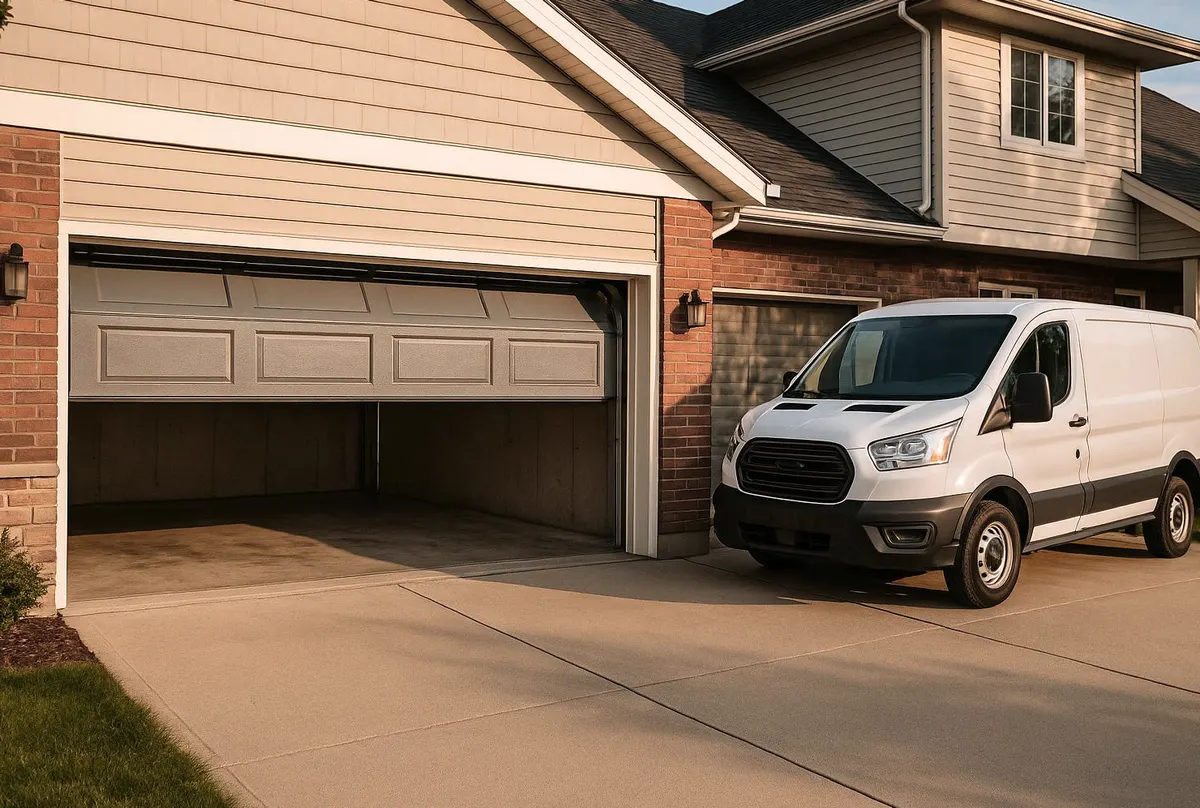
A typical call starts the same way: one spouse thinks the garage door is fine, just a little "ugly" near the bottom. The other spouse is convinced it's falling apart and wants a new one ordered yesterday. When a technician gets out there, the truth is usually somewhere in the middle — and it almost always comes down to moisture.
What a technician actually sees on these calls
On a standard service visit in this area, the pattern looks like this: rust freckling along the bottom 12 to 18 inches of a steel door, a wood door that won't latch flush anymore because one panel has swollen, and hardware — hinges, rollers, the bottom bracket — with a dusty orange coating from months of humidity and road salt splashing up during winter. None of that is random. It's what happens when a door spends all summer sitting in humid air and all winter getting hit with salt brine, slush, and repeated freeze-thaw cycles.
Why this happens here specifically
Garage doors in this part of New Jersey deal with a rough one-two punch. Humid summers keep moisture sitting on metal surfaces and soaking into wood grain, especially in garages that don't get much airflow. Then winter brings snow, ice, and the salt that melts it — which tracks in on tires and boots and ends up splashed directly onto the bottom panel and hardware every time you pull in or out. Add nor'easters that drive rain sideways into the door seal, and freeze-thaw cycles that expand and contract any water that's worked its way into seams or wood fibers, and you've got a door that's under constant low-grade attack for most of the year.
A lot of homes in this area still have their original garage door, sometimes decades old. Older doors weren't built with today's galvanized coatings or moisture-resistant composites, so they're more exposed to this cycle than a newer install would be.
Steel doors: rust is the tell
On steel doors, moisture damage shows up as rust — usually starting at the bottom panel where water pools, around screw heads, and at any spot where the factory coating got scratched or chipped (a shopping cart ding, a bike pedal, a stray rock from the mower). Surface rust that hasn't broken through the metal is mostly cosmetic. You can sand it, prime it, and repaint it. The real problem is rust that's eaten through to create pitting or holes — at that point the panel is structurally compromised and painting over it is just hiding the issue, not fixing it.
Wood doors: swelling is the tell
On wood doors, the equivalent problem is swelling. Humid air gets absorbed into the wood fibers, the panels expand, and suddenly the door is dragging on the track, the weatherstripping won't seal evenly, or the whole door feels heavier to lift. Come winter, when things dry out and contract again, you might notice gaps that weren't there before, or paint that's starting to crack and peel along panel seams — a sign water got in and out repeatedly. Untreated, repeated swell-shrink cycles eventually warp panels permanently, and at that point sanding and repainting won't bring them back flat.
How to tell cosmetic from serious
- Press a key or screwdriver gently into any rust spot. If it's solid underneath, it's surface rust. If it flakes or crumbles, the metal is compromised.
- Check if the door still closes flush and latches easily. A door that's dragging, sticking, or leaving daylight gaps at the bottom has moved out of alignment from swelling or warping.
- Look at the bottom corners and panel seams. That's where water sits longest and where damage shows up first.
- Listen for new sounds. Grinding or scraping that wasn't there before often means a swollen panel is rubbing against the track or a rusted roller is seizing up.
What actually helps, long term
- Wipe down the bottom panel and hardware after messy winter weeks — getting salt off before it sits for days makes a real difference.
- Keep weatherstripping at the bottom intact and replace it once it's cracked or flattened, since it's your first line of defense against both rain and salt spray.
- Make sure garage ventilation isn't trapping humid air against the door all summer; even cracking a window or running a fan periodically helps wood doors especially.
- Touch up small paint chips on steel doors before they turn into rust spots — it's a five-minute job that prevents a much bigger one.
When to call Clark Garage Door
If rust has gone past the surface, if a wood panel is warped enough that the door won't seal or latch properly, or if hardware is seized up from corrosion, it's time for a real inspection rather than another coat of paint. Clark Garage Door can assess whether it's a garage door repair — replacing a single rusted panel, swapping corroded hinges and rollers — or whether the damage justifies a full garage door installation with materials better suited to this area's humidity and salt exposure. Either way, you'll get a straight answer instead of a guess.
If you're in Clark, Westfield, Cranford, Rahway, Scotch Plains, Linden, Roselle, or Garwood and you're not sure which side of this argument is right, give Clark Garage Door a call — we'll take a look and tell you straight whether it's cosmetic or something worth fixing now.